Dental adhesives play a critical role in modern restorative dentistry, creating a strong bond between restorative materials and tooth structure. From direct composite restorations to indirect crowns, veneers, and bridges, choosing the right dental adhesive can improve retention, reduce microleakage, and support long-term clinical success.
At Net32, dental professionals compare brands, formulations, and pricing from multiple vendors in one place—making it easier to find the best denture adhesive for every clinical scenario.
Below is your comprehensive guide to the best denture adhesive in today’s operatories.
Features to Look for in Dental Adhesives
High Bond Strength
A strong bond helps improve restoration longevity and reduces the risk of debonding or marginal failure.
Reduced Post-Operative Sensitivity
Advanced formulations help seal dentinal tubules and minimize sensitivity following restorative procedures.
Moisture Tolerance
Adhesives that perform reliably in challenging clinical environments can improve procedural success.
Compatibility
Look for adhesives that work with composites, ceramics, zirconia restorations, and metal substrates when applicable.
Simplified Application
Fewer procedural steps can help increase efficiency while reducing technique sensitivity.
Best Denture Adhesives
Best Denture Adhesive Cream
 | Type: Denture adhesive cream Fixodent Complete Original is a classic cream-style denture adhesive designed to help keep dentures securely in place throughout the day. Its smooth cream formula is easy to apply and helps create a seal between the denture and gums. Fixodent Complete Original is one of the most widely used denture adhesives thanks to its strong hold, easy application, and dependable daily performance. The cream formula can help reduce food particle infiltration while improving denture stability. Best for:
|
Best Denture Adhesive for Upper Dentures
Super Poligrip Extra Strength Denture Adhesive Powder
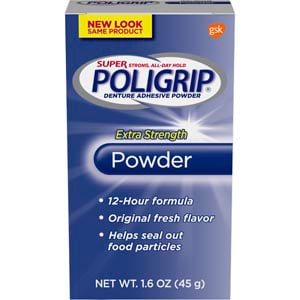 | Type: Denture adhesive powder Super Poligrip Extra Strength Denture Adhesive Powder is a powder-style adhesive designed to provide all-day hold with a lightweight feel. The powder format makes it easy to sprinkle adhesive evenly across the denture surface without the thicker texture of a cream. Upper dentures often have more surface area than lower dentures, making them a good match for a powder adhesive that can spread thinly and evenly across the palate-facing surface. Best for:
|
Best Denture Adhesive without Zinc
Poligrip Free Denture Adhesive Cream
 | Type: Zinc-free denture adhesive cream Poligrip Free Denture Adhesive Cream is a zinc-free option for users who want strong hold without artificial colors or flavors. It helps create a seal between the denture and gums while supporting comfort for daily wear. This is a strong option for denture wearers who prefer a zinc-free formula but still want the familiar application style of a cream adhesive. Best for:
|
Best Denture Adhesive for Loose Dentures
 | Type: Denture adhesive cream Fixodent Plus Scope is a denture adhesive cream that combines hold with a fresh Scope flavor. It is designed to help keep dentures in place while forming a seal that helps keep food particles out. Loose dentures should always be evaluated by a dental professional, especially if they require more adhesive over time. However, for mild looseness, Fixodent Plus Scope may help provide daily support, added freshness, and improved confidence while eating or speaking. Best for:
|
Best Denture Adhesive for Partial Dentures
Poligrip Comfort Seal Denture Adhesive Strips
 | Type: Denture adhesive strips Poligrip Comfort Seal Denture Adhesive Strips are pre-cut adhesive strips designed for a cleaner, no-ooze application. The strip format can be useful for partial denture wearers who want a more controlled amount of adhesive without applying a full layer of cream. Partial dentures often require targeted retention without excess adhesive. Comfort seal strips can help reduce mess while still supporting a strong daily hold. Best for:
|
Frequently Asked Questions (FAQs)
How do you remove denture adhesives?
To remove denture adhesive, start by rinsing your mouth with warm water to help loosen the adhesive. Then gently remove the denture using a rocking motion. After the denture is out, brush the denture with a soft denture brush and cleanser to remove leftover adhesive. You can also use a soft toothbrush or damp washcloth to gently clean adhesive residue from your gums.
How do you get denture adhesive off gums?
To get denture adhesive off your gums, rinse your mouth with warm water and gently brush your gums with a soft-bristled toothbrush. You can also use a damp washcloth or gauze to wipe away remaining adhesive. Avoid scraping aggressively, as this can irritate gum tissue.
How do you apply denture adhesives?
To apply denture adhesive, start with clean, dry dentures. Apply the adhesive in small strips or dots according to the product instructions, making sure not to use too much. Avoid placing adhesive too close to the edges of the denture, since excess product may ooze out. After applying, place the denture in your mouth, press firmly, and bite down for a few seconds to help secure the fit.
How does denture adhesive work?
Denture adhesive works by creating a thin layer between the denture and the gums. When exposed to saliva, the adhesive expands slightly and helps improve grip, seal, and stability. This can reduce denture movement, help block food particles, and make eating or speaking feel more secure.
How long does denture adhesive last?
Most denture adhesives are designed to last for several hours, and many formulas are marketed for all-day hold. However, actual wear time depends on the product, denture fit, saliva levels, eating habits, and whether the adhesive is used on upper, lower, full, or partial dentures. If adhesive wears off quickly or needs to be reapplied often, the denture may need an adjustment or reline from a dental professional.